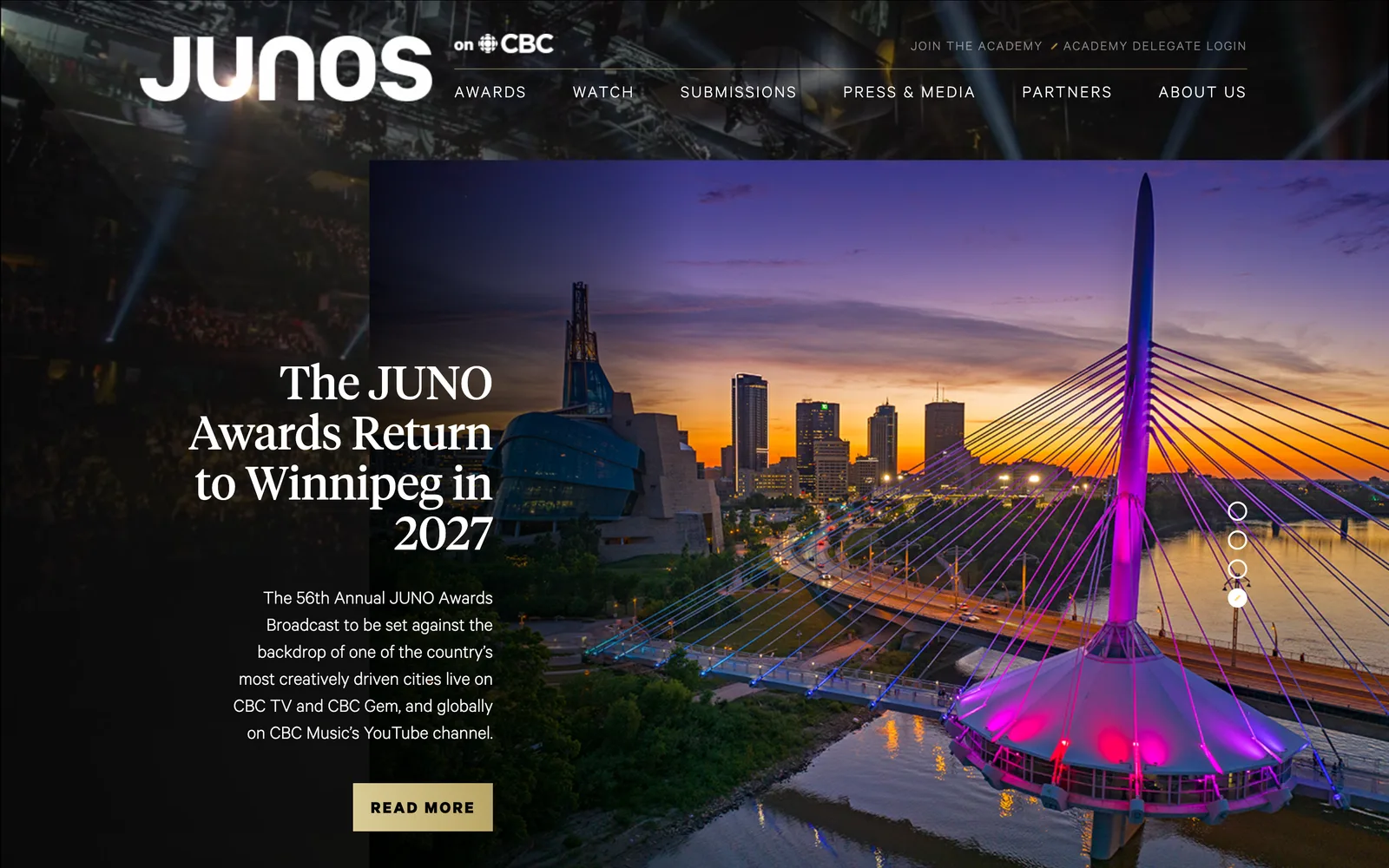
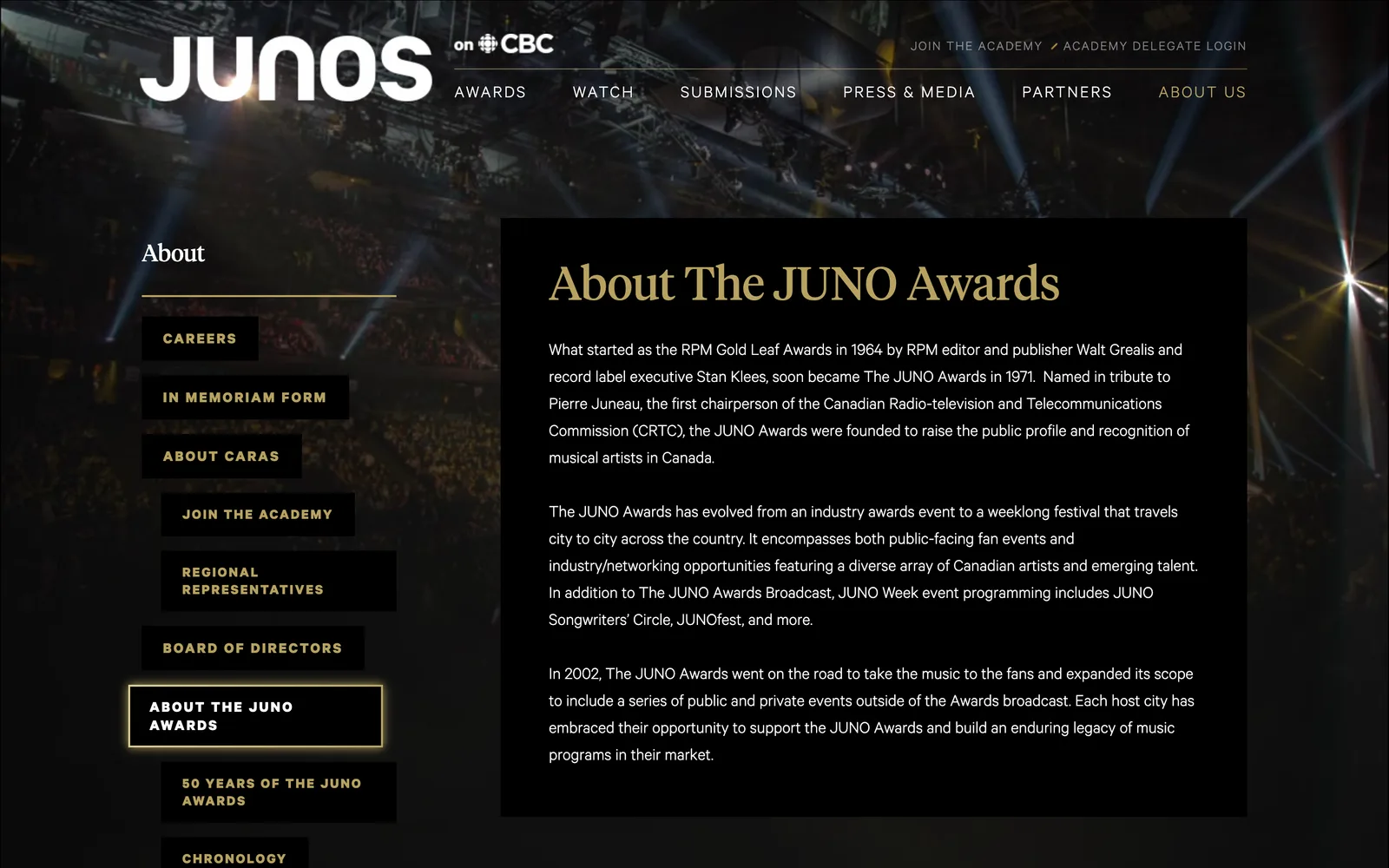
I started in the database. Before any wireframes were drawn, I mapped every content type the legacy site held (artist, nominee, winner, category, ceremony year, performance, Hall of Fame inductee) and how those records related. That map became the spine of the new site structure and dictated the content templates the marketing team would eventually use to publish. The discipline of working from the data first is what saved the rebuild from inheriting the inconsistencies of the legacy system, and it is the reason the migration shipped without data loss.
From there I worked outward into navigation and user experience. I rebuilt the site map around three primary jobs visitors come to do: find a nominee or winner, watch broadcast moments, and follow the current awards season. Everything else (about the academy, sponsors, press, the Hall of Fame) sits behind those three. The navigation is shallow on purpose so visitors arriving from a Google search land within one click of what they came for. I also benchmarked the user experience against peer awards-show websites the JUNOS marketing team admired, including the Oscars, the Grammys, and the Country Music Awards, so the rebuild could honour the conventions visitors expect from a major awards site without losing what makes the JUNOS feel Canadian.
I then designed the responsive interface, locked the typographic system that holds up at both broadcast-graphic scale and mobile-list scale, and built the custom WordPress publishing platform that powers all of it. The rebuild ran a staggered front-end and back-end track so I could keep the design moving while my development collaborators tackled the migration tool that would carry the historical archive into the new system. The launch plan staged the new site on the production hosting environment a full week before go-live so the quality assurance work could happen on the real server, not on a development machine that might behave differently under traffic.